Introduction: Living at 2 °C
Scientists just made it official. In this year - 2046 - the world's average temperature is 2 °C hotter than it was in the late 19th century, when humanity’s greenhouse gas emissions were just beginning to alter the climate.
It feels like it shouldn’t matter. I’m not sure I’d notice if my room warmed by 2 °C. But when averaged out over the whole Earth, it represents an almost unimaginable accumulation of heat. Worse, that heat isn’t spread out evenly. Land has warmed about twice as quickly as water. The Arctic has warmed four times faster than the world as a whole.
And it’s not like every day is just a bit warmer. The worst heat comes in waves, and the waves are much hotter than anything people have felt before. Heatwaves that were once-in-50-year events in the late 19th century now happen every few years. And heatwaves that were simply too hot to happen are now all too real – and all too deadly.
Changing temperatures are disrupting precipitation patterns. Rains don’t come as expected, or they fall too hard, too fast. Water in soil dries up so quickly that ecosystems are beginning to break down. Now, the world’s food growing regions, its breadbaskets, no longer produce enough food for the world’s 9.4 billion people.
I was born in 2026, when average global temperatures were about 1.4°C warmer than they had been in the late 19th century. In my lifetime, a threat that once must have felt distant and abstract – climate change – became a matter of life and death for hundreds of millions of people.
This is the story of how we got here.
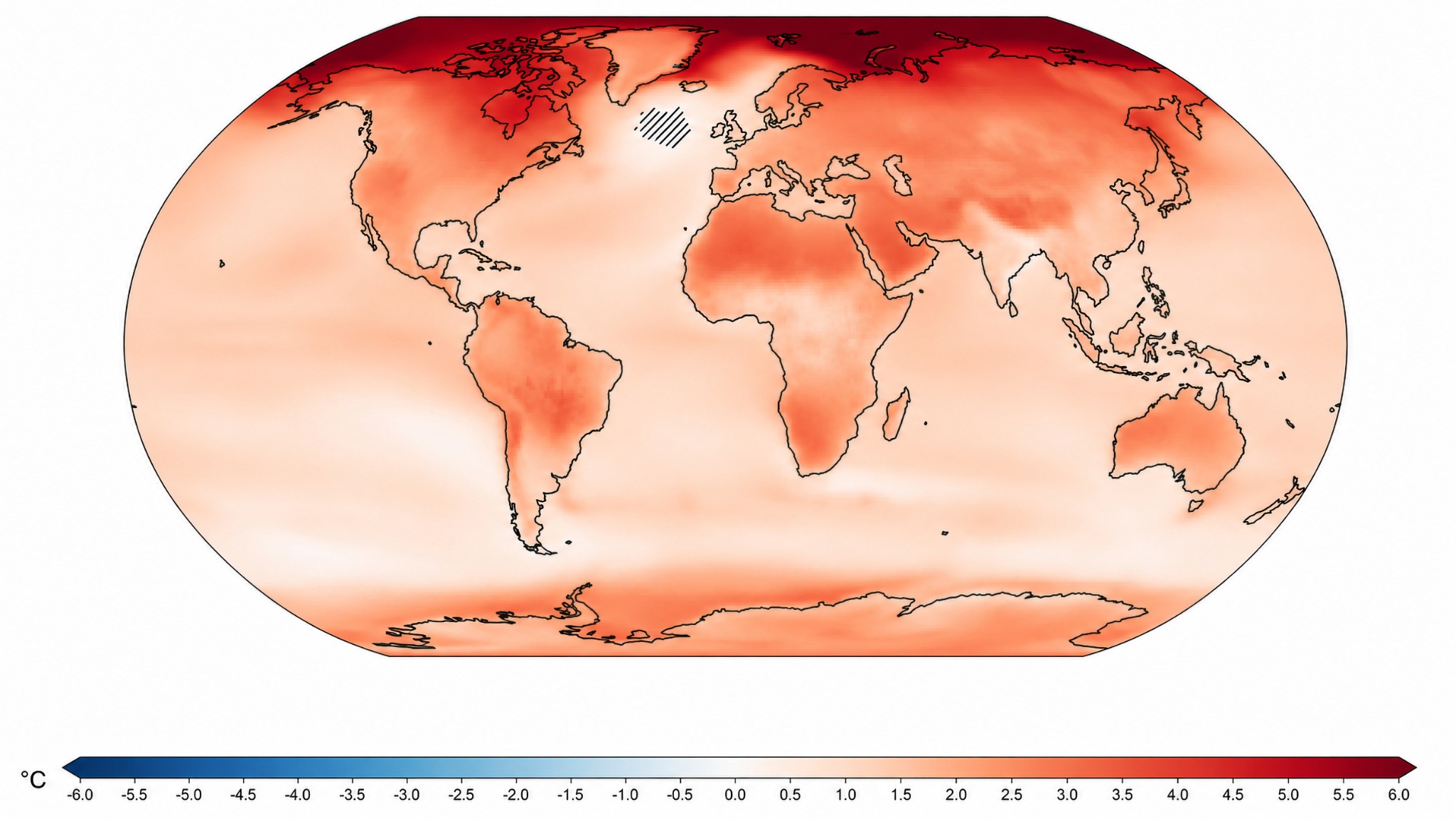
This map simulates regional temperature change when Earth has warmed by 2 °C, relative to its average temperature in the late nineteenth century. It is a modified version of an image obtainable from the IPCC WGI Interactive Atlas. Source: Intergovernmental Panel on Climate Change, “WGI Interactive Atlas,” accessed August 10, 2026.
2026-2046: Emissions Plateau, But Warming Continues
When I was born, most governments still supported the goals of the 2015 Paris Agreement. In public, they pledged to limit warming to “well below” 2 °C, relative to Earth’s average temperature in the late 19th century.
In private, policymakers understood that they had little chance of meeting that goal. Human emissions of carbon dioxide, the greenhouse gas most responsible for global warming, were plateauing – not falling. That distinction, between stabilization and decline, turned out to matter enormously.
By the late 2020s, global carbon dioxide emissions peaked at roughly 40 billion tons per year. Many celebrated that emissions had stopped rising. Politicians took credit. Pundits argued that global warming wasn’t, after all, the crisis it had seemed to be. Leading scholars declared that by tackling the emissions problem, governments had shown the capacity to deal with other, world-threatening issues – like the continued development of artificial intelligence (AI).
But carbon dioxide takes a long time to leave the atmosphere. True, it was no longer accumulating as quickly in the atmosphere as it had been. But overall atmospheric concentrations of the gas were still rising, trapping heat from the Sun by absorbing and re-emitting infrared radiation that would otherwise have escaped into space.
And because emissions didn’t fall, global temperatures continued to rise. By 2036, when I was ten years old, the world had warmed by about 1.7°C since the late 19th century.
The impacts were growing more severe. Heatwaves, for example, were ever more frequent and long-lasting, especially in already hot regions, like South Asia and the Middle East. Cities such as Mumbai and Riyadh began experiencing life-threatening heat for ten days at a time, several times a year.
Thousands of people died in these heatwaves. But the death toll tended to be even higher in regions where there had been no historic need for cooling: much of Europe, for example. Heatwaves with no precedent in recorded history were now routinely associated with tens of thousands of deaths.
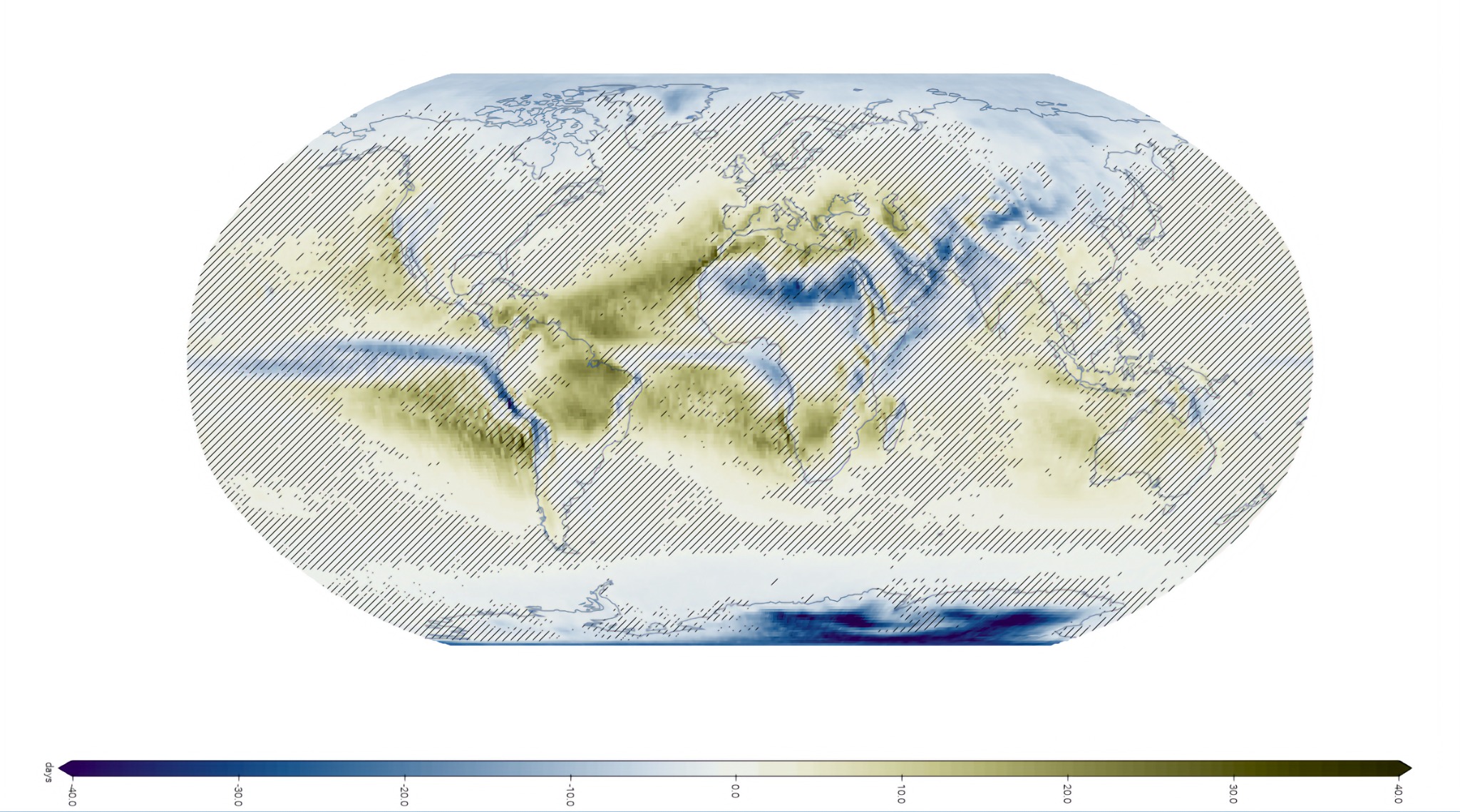
This map simulates changes in consecutive dry days when Earth has warmed by 2 °C, under scenario SSP5-8.5. The baseline is 1850–1900. It is a modified version of an image obtainable from the IPCC WGI Interactive Atlas. Source: Intergovernmental Panel on Climate Change, “WGI Interactive Atlas,” accessed August 10, 2026.
At the same time, droughts intensified.
Part of the reason was that a warmer atmosphere could hold more moisture: about 7% more for every degree Celsius of warming. So when it rained, it often rained more intensely. But when it didn’t rain, the atmosphere could pull more water out of soils and vegetation, drying them faster. A warmer world paradoxically led both to wetter storms and deeper droughts.
Both torrential rains and severe drought ruined harvests in one food-growing region after another. But during my childhood, the worst extremes rarely affected multiple regions at once.
For most people, in most countries, their impacts still seemed manageable. One country might suffer drought, but others would produce enough food to compensate. Global trade tended to ease local spikes in food prices.
New technology – from increasingly reliable, AI-generated weather forecasts to genetically modified organisms (GMOs) – kept yields high. The world’s food system seemed too flexible, too interconnected, and above all too modern to fail.
That would soon change.
2036-2042: Cracks in the System
As global temperatures began to approach 2 °C above their late 19th-century average, what changed wasn’t just the intensity of heatwaves and droughts from one region to the next. It was also their synchronization in regions all over the globe.
Climate scientists had long warned about this possibility. As the Arctic warmed far faster than lower latitudes, the temperature contrast that fueled the polar jet stream weakened. The jet stream began to slow and buckle into larger, more exaggerated loops: patterns known as Rossby waves.
At times, these waves stalled in place. Now, areas separated by thousands of kilometers could experience similarly extreme weather at the same time: simultaneous heatwaves, droughts, or torrential rains.
This mattered most for agriculture. The world’s food supply depends heavily on a handful of key regions, known as breadbaskets. These include the U.S. Great Plains (where corn and soybeans are the key crops); Brazil and Argentina (soybeans, maize, and beef); Northern China (wheat and maize); India’s Punjab and Haryana (wheat and rice); and parts of Europe and the Black Sea region (wheat).
Harvests in these regions had rarely failed at the same time. But in the late 2030s, that began to change. Prolonged heatwaves reduced yields in southern Europe and parts of China. Droughts intensified in Brazil, where soybean production depends on consistent seasonal rainfall.
Meanwhile, groundwater depletion accelerated. In places like northern India and the Great Plains, farmers had been able to pump water from underground aquifers when rainfall failed. But these aquifers, some of which had filled over thousands of years, were being drained more quickly than they could refill.
And as temperatures rose, and evaporation increased, crops needed more and more water just to survive. Irrigation demands surged, accelerating the depletion of groundwater. A dangerous feedback loop had emerged, in which higher temperatures led to more evaporation, more evaporation led to more demand for water, more demand led to more groundwater depletion, and less groundwater increased vulnerability to drought.
The ocean was also becoming a less reliable source of food, because the coral reefs were under increasing strain.
Granted, the oceans were warming less quickly than land. But in shallow water, marine heatwaves brought unprecedented temperatures – just as they did on land. Under heat stress, corals expel the algae that usually provide most of their food, causing them to turn white, or “bleach.” If the heat lasts too long, the corals begin to starve.
Ocean water was moreover absorbing carbon dioxide from the atmosphere. The gas reacted with the seawater to form carbonic acid, lowering the pH of the water – and the availability of the ions corals need to build their skeletons. It was growing harder and harder for them to recover from bleaching.
In the late 2030s, most of the world’s reef systems were clearly dying out. Roughly one-tenth of the global fish catch depended on coral reef ecosystems. Across the tropics – parts of Indonesia, for example, and coastal Madagascar, where millions already struggled with deadly heatwaves – reef fisheries actually provided the majority of people’s protein.
When I entered high school in the early 2040s, I learned to my alarm that the world’s food system was under increasing strain. My teachers assured me, however, that experts were working on the problem. They said that there would still be enough food for the foreseeable future.
And I discovered that about a third of the food grown in the United States is never eaten. For a few years, that calmed me down.
But only for a few years.
2042-2044: Decarbonization, Rising Emissions, and a New Baseline
The green economy expanded enormously in my lifetime.
For a while, it looked like American and European governments and companies would lead its expansion. But even before I was born, the U.S. government slashed its goals for decarbonization and pulled out of the Paris Agreement, the 2015 treaty that aimed to limit global warming to well below 2°C. After the Russian invasion of Ukraine, the transition to renewables stalled even in Europe – at least for a few years.
China would lead the transformation of the world’s energy system. The country’s central and provincial governments, together with state-backed banks, used subsidies and cheap credit to direct vast investments, amounting to trillions of dollars, into solar, wind, and electric vehicles.
These dividends paid off when the U.S.–Iran war of 2026 revealed the precarity of globe-straddling trade networks that transported fossil fuels.
By 2040, the world’s economic center had moved decisively to China, and some 50% of global electricity came from renewables. In many regions – cities across coastal China, for example – deaths from airborne pollutants fell sharply.
But although the world’s energy system was changing with a speed few had imagined possible, global warming was barely slowing down.
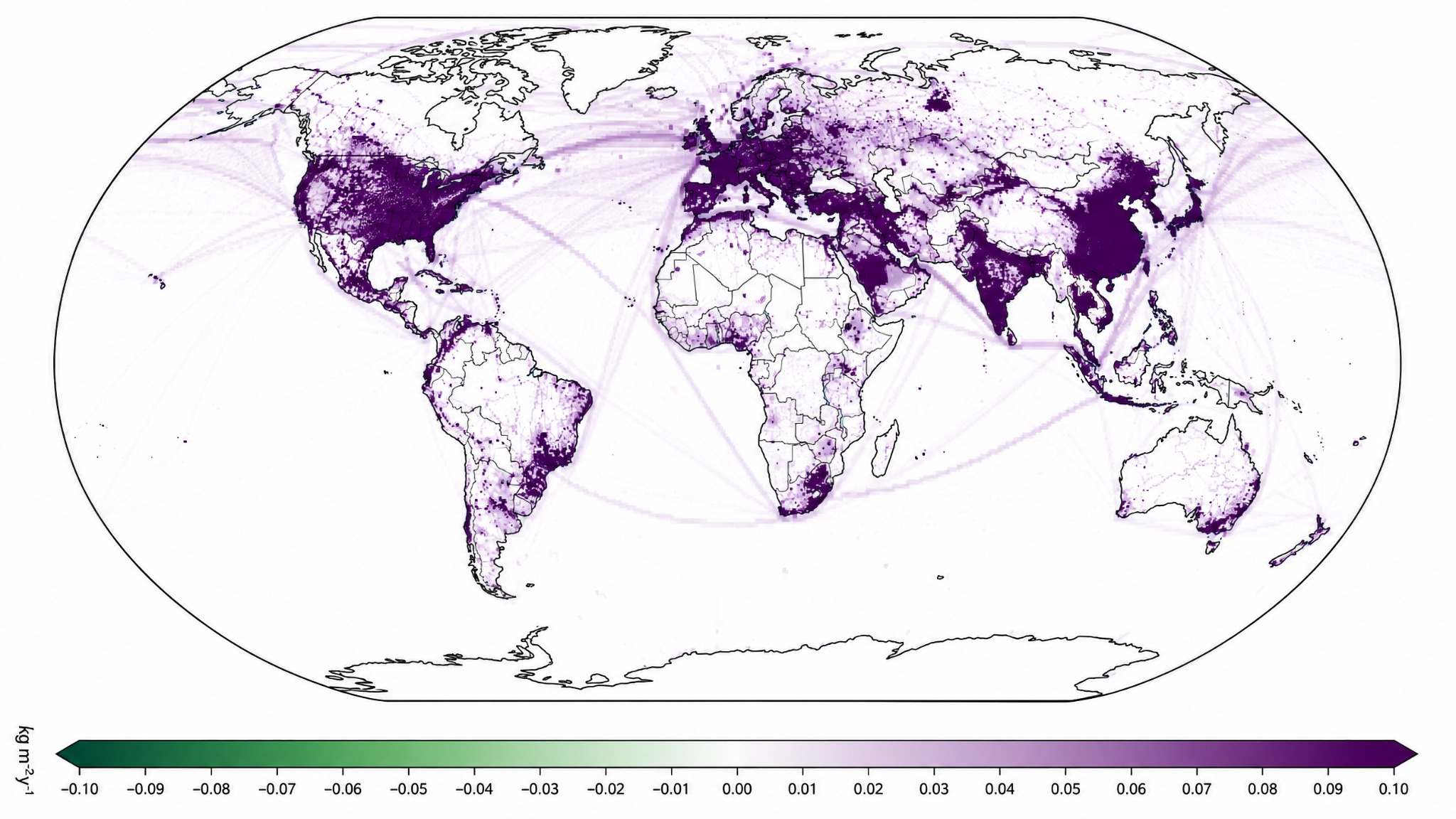
This map simulates atmospheric CO₂ in 2040 according to RCP 4.5. It is a modified version of an image obtainable from the IPCC WGI Interactive Atlas. Source: Intergovernmental Panel on Climate Change, “WGI Interactive Atlas,” accessed August 10, 2026.
The problem was that worldwide demand for electricity had also surged. Part of the reason was the breakneck construction of new data centers to power increasingly capable AI systems. Another part was continued economic development in South Asia, Africa, and South America, and continued high consumption in the developed world.
So, while fossil fuels accounted for a smaller share of global energy use, the total amount of energy generated by fossil fuels had scarcely declined. Meanwhile, greenhouse gas emissions from industry and agriculture remained stubbornly high.
By the early 2040s, AI systems with seemingly superhuman intelligence occupied increasingly important advisory roles within governments and corporations. The construction of the physical infrastructure that powered these systems had released carbon dioxide into the atmosphere, and the operation of the systems generated even more emissions where the grid depended on fossil fuels.
It was therefore ironic that AI advisors, which had contributed to global warming, provided the warnings that finally transformed how many governments perceived the risks of climate change.
But it increasingly seemed like it might be too late. Baseline conditions in many breadbasket regions had shifted. Catastrophic heatwaves, droughts, and floods were no longer anomalies. Now, they were expected during the growing season.
Crops like wheat and maize are highly sensitive to temperature, especially during key growth stages. When temperatures rise too high, even briefly, harvest yields can drop sharply. Prolonged heat compounds the damage.
Worse, soil moisture had declined in most regions. Dry soils don’t just affect crops; they also amplify heat. Moist soils use incoming solar energy to evaporate water, which has a cooling effect. Dry soils can’t do that, so more energy goes into raising temperatures.
This created another feedback loop: drought dried soils, dry soils increased heat, and increased heat worsened drought.
By 2044, this cycle had firmly established itself in multiple regions. Harvests were growing dangerously unreliable. In parts of the developing world, especially East Africa and West Asia, food prices were rising beyond the reach of poor families. Popular discontent mounted, and violent protests began to threaten governments.
The worst was yet to come.
2044–2045: The Failure of the Breadbaskets
In early 2044, AI systems forecast the development of a landmark El Niño event – the most intense since 2027.
El Niño refers to a periodic warming of surface waters across the tropical Pacific Ocean. This warming disrupts global atmospheric circulation, altering rainfall patterns around the world.
The 2044 El Niño developed between March and May, and by late summer turned out to be as powerful as predicted. It intensified drought in several key agricultural regions simultaneously. India’s summer monsoon weakened dramatically; Southeast Asia experienced below-average rainfall; parts of Brazil became even drier; Southern Africa faced severe drought.

This simulation of sea surface temperature and precipitation anomalies in late 2044 was created using the following NOAA resources: SST – Global, Monthly Difference from Average (November 2015) and El Niño and Rainfall.
Extreme heatwaves in ocean water, known as marine heatwaves, bleached nearly all of the world’s coral reefs.
For India, the consequences were especially severe. In just a few months, beginning in June, the summer monsoon usually provides up to 80% of India’s annual rainfall. Across eastern and southern India, monsoon rains inundate paddies where farmers grow vast quantities of rice.
But in 2044, the rains didn’t come, and the rice didn’t grow.
Irrigation systems began to fail. In India’s Punjab and Haryana, decades of groundwater extraction had already lowered water tables. Pumps had to reach deeper to extract water, requiring more energy. Now, some wells simply ran dry. There wasn’t enough water to grow wheat, much less rice, which requires more moisture.
In the Great Plains, parts of the Ogallala Aquifer, the region’s main groundwater source, were severely depleted. Farmers who had once relied on irrigation depended on rainfall that no longer came reliably. Without irrigation as a backup, many plants withered and died.
Last year, in 2045, the worst-case scenario, the one scientists had warned about for decades, finally materialized.
Multiple breadbasket regions experienced severe yield losses in the same year. The U.S. Corn Belt saw staggering declines due to heat and drought. Brazil’s soybean harvest fell sharply after prolonged dry conditions and wildfires. Harvests in India and Pakistan failed amid consecutive weak monsoons. Northern China endured extended heatwaves during key growing periods.
It was a global crisis unlike any in modern history. Normally, shortages in one region had been offset by surpluses elsewhere. But in 2045, there were no surpluses.
There was simply not enough food to go around.
2045–2046: The Great Hunger
As harvests collapsed, governments struggled to protect their populations. Major exporters restricted food exports. This was a rational decision at the national level, but devastating globally.
Countries that depended on food imports suddenly faced severe shortages, especially in parts of the Middle East, North Africa, and sub-Saharan Africa. Global food prices soared. Markets that had once redistributed food efficiently began to break down.
By late 2045, food prices had tripled in many regions.
The wealthy worried about unrest. The middle class suffered financial hardship. And the poor went hungry.
Malnutrition increased rapidly. In the hardest-hit regions, such as North Africa and the Middle East, food shortages combined with extreme heat, water scarcity, and suffocating wildfire smoke.
Public health systems, already strained, began to fail. Migrants poured into cities from the stricken countryside, but most found little food and no work. Other migrants surged across national borders, and at first there was little governments could do to stop them.
Political instability followed. Massive protests – echoing the “Arab Spring” of the early 2010s – threatened governments in one overcrowded city after another. Refugees were demonized as invaders, and governments were blamed for their arrival.
Many regimes responded with brutal repression. Migrants were shot at the border and detained in sprawling camps. Protests were broken up and banned.
But repression only fueled more anger. After all, governments could not provide food. And for all their promises they had failed to slow down global warming.
As I write this, six governments have collapsed across Africa and the Middle East. Elsewhere, political violence runs rampant. Government buildings have been sacked. Politicians have fled capitals.
Millions have died in the violence.
And the true scope of this year’s global disaster is only just coming into focus. The death toll is hard to calculate in the hardest-hit areas, where data are difficult to obtain. But AI systems estimate that tens of millions have died not just in revolutions, but from the combined effects of famine, disease, and heat.
The vast majority of these deaths seem to be concentrated in the poorest parts of the Middle East and Africa. But many have also died in historically marginalized communities within the richest cities of North America, Europe, and Asia.
The Great Hunger, as some now call it, could be the worst mass mortality event since the Second World War.
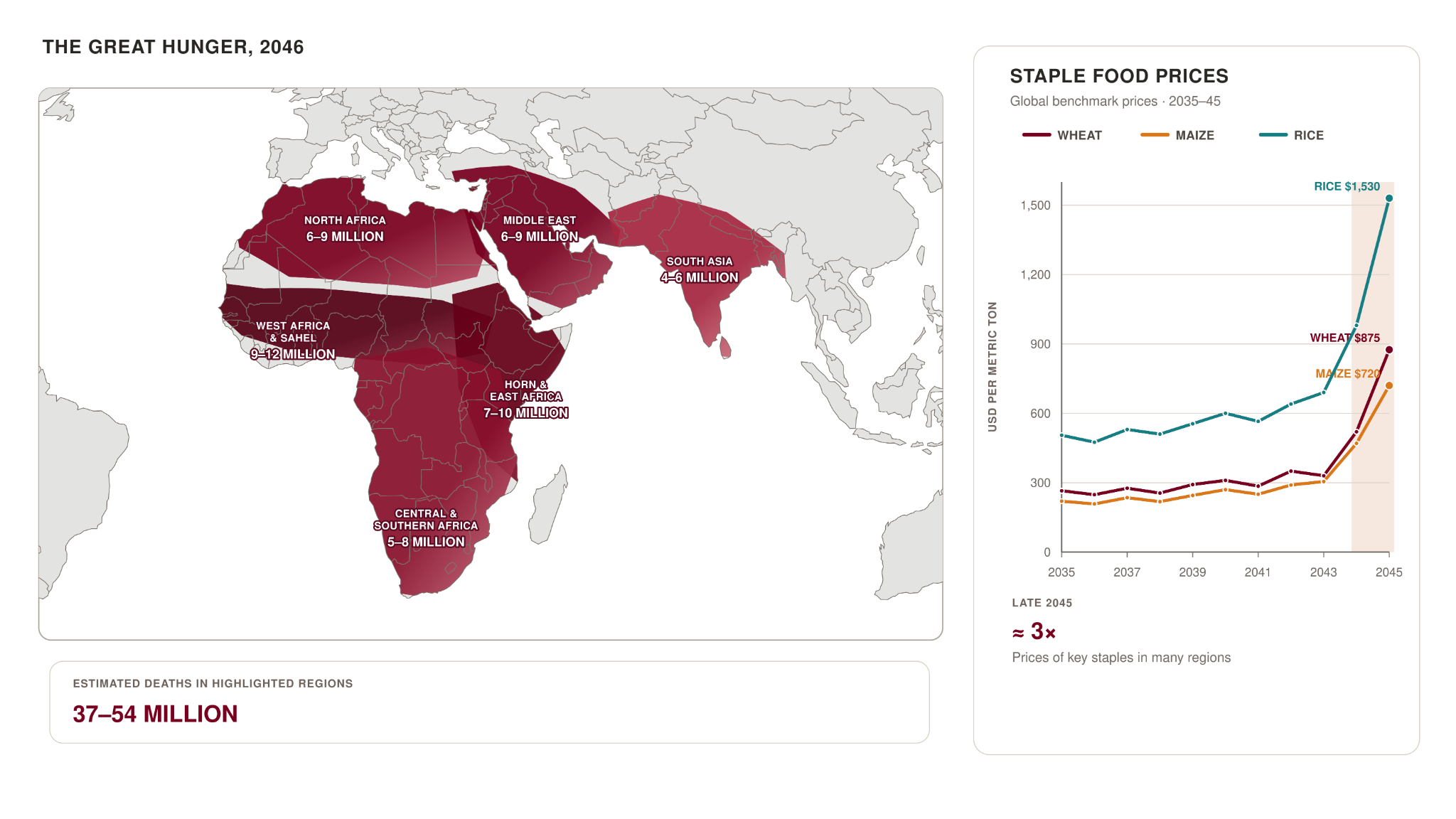
Estimated mortality in the worst-affected regions, and global benchmark staple prices, during the Great Hunger of 2046. Prices for 2035–45 are expressed in nominal U.S. dollars per metric ton. Benchmark definitions and historical price data are from the World Bank’s Commodity Price Data (“Pink Sheet”).
Environmentalists call it “The Great Betrayal.” After all, it was predicted, and it could have been avoided. Many blame billionaires, oil companies, and politicians in the world’s richest countries for the death toll.
Terrorist attacks are beginning to hit pipelines, refineries – even wealthy neighborhoods in the world’s biggest cities. Although it’s only worsening inflation, this eco-terrorism seems increasingly popular.
In a warming world, nobody can truly feel safe.
2046: An Uncertain Future
What is most striking, looking back from 2046, is not that any single event was unprecedented. Droughts had happened before. Heatwaves had happened before. Strong El Niño events had happened before.
What changed was their overlap. Warming didn’t just make individual events more severe; it made them more likely to occur at the same time, in the same critical regions.
Synchronization is what broke the world’s food system.
Even now, with the world 2 °C hotter than it was in the late 19th century, scientists and AI advisors argue that there’s still time to avoid a permanent, worldwide breakdown of the systems that sustain human life.
There’s clearly a need for more climate-controlled agriculture. And AI systems are already designing crops that could thrive amid droughts and heatwaves.
Still, it’s obvious that there are hard limits to what adaptation can achieve without mitigation. Global temperatures have to stabilize. Otherwise, there will be many more multiple breadbasket failures in our future.
Time is scarce. The coming decades are deeply uncertain, and frightening for many in my generation.
I was born into a world that still had options. Our parents chose not to use them, and now we must all face the consequences of their inaction.
We can only hope that it’s not too late to save our societies, our species, our planet, and our future.